

Hearing Wellness · A Field Review
If You Can Still Hear — But Conversations Have Started to Feel Like Work — Read This Before You Spend a Fortune on Hearing Aids
A growing number of adults over 55 are reaching for a simple 20-minute daily routine before committing to expensive devices. Here’s why — and how to tell if it’s right for you.

It Doesn’t Announce Itself. It Creeps.
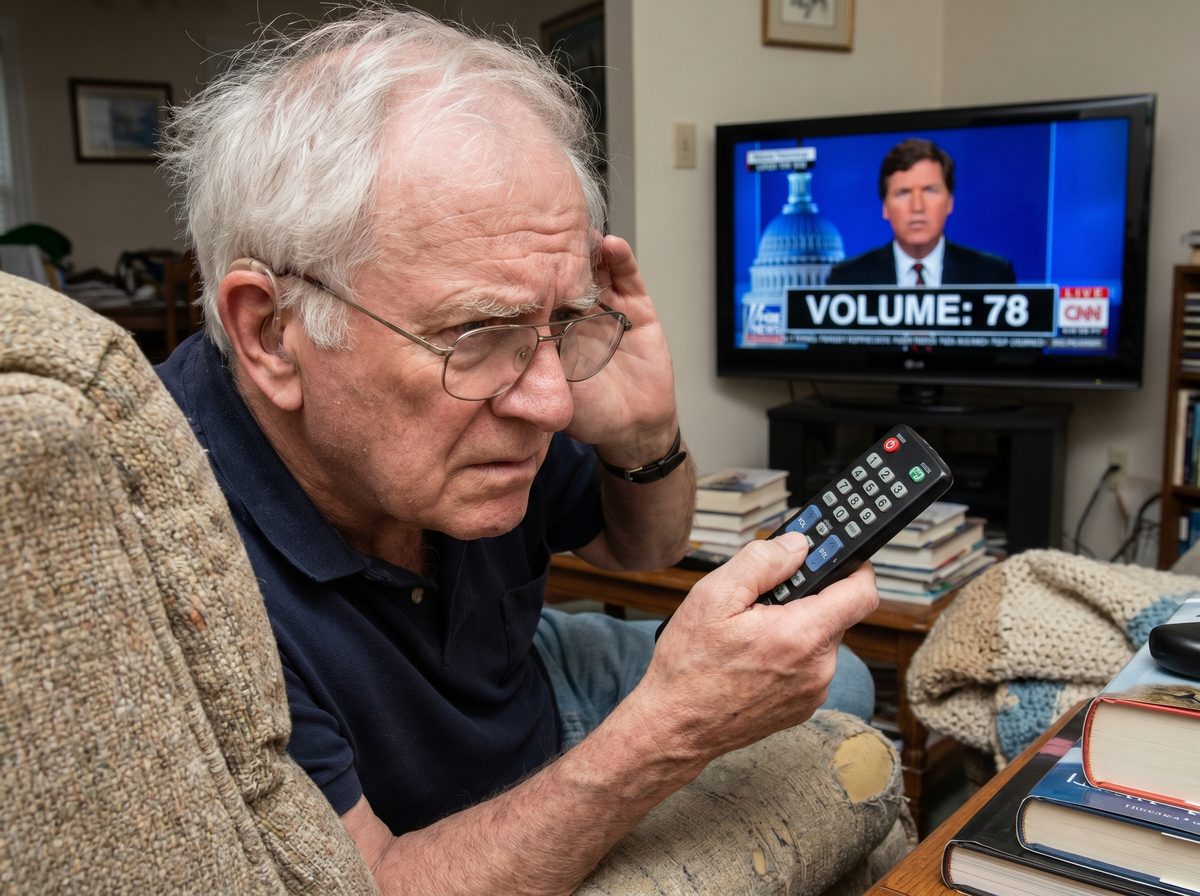
It starts small. A missed word at dinner. The TV a few notches louder than it used to be. Captions on “just in case.” You catch yourself filling in the blanks — guessing the end of a sentence, laughing a half-second late, asking “what?” and then waving it off with “never mind.”
So you tell yourself everyone mumbles now. That restaurants are just louder. That you’re tired.
And maybe some of that’s true. But if you’ve quietly started steering away from the noisy end of the table, the big group conversation, the phone call you used to enjoy — something has changed. Not your mind. Not your interest in the people around you. Your ears have simply started working harder than they used to. And nobody warned you it would feel like this.

The part almost nobody explains
You Don’t Need It Louder. You Need It Easier.
Most people assume hearing trouble means sound gets quieter. For a lot of adults, that isn’t the real problem at all. The volume is fine. The clarity isn’t.
You can hear that someone is talking. You just can’t always make out the words — especially with background noise, several people at once, or a voice from the next room. So your brain quietly takes over the job your ears used to do, stitching the sentence together from the pieces it caught. That work is invisible. It’s also exhausting. There’s a name for it: listening strain.
“Everything got louder. Nothing got clearer.”
It’s the single most common thing people say after trying an amplifier or a cheap pair of online hearing aids. Turning up a radio with bad reception just gives you louder static. The goal was never more volume. It was less effort — less straining to keep up, less coming home from dinner wrung out from a night of guessing.
The Real Cost Isn’t Missing Words. It’s Missing Moments.
Listening strain almost never feels like an emergency — which is exactly what makes it so easy to ignore. It doesn’t take anything from you all at once. It takes it one small moment at a time.
The punchline you didn’t catch, so you smiled along. The grandchild’s small voice you asked to repeat one too many times, until they stopped offering. The dinner where you went quiet — not because you had nothing to say, but because keeping up felt like more trouble than it was worth.
Almost no one decides to step back from their own life. They just slowly do — and the people who love them slowly, kindly adjust to a version of them that’s a little less there. That’s the real price of waiting. Not silence. Distance.
Age-related hearing change is one of the most common parts of getting older. You are not slow, and you are very far from alone. But common doesn’t mean you have to sit still for it.
“But I’m Not Ready for Hearing Aids.”
If you just heard yourself say that — you’re in very good company.
Hearing aids genuinely help a lot of people, and for some they’re absolutely the right call. This isn’t a page that’s going to tell you they’re a scam, because they’re not. But for plenty of adults, hearing aids are a big leap — financially and emotionally:
- They can run $4,000–$6,000 a pair, before fittings, adjustments, and batteries year after year.
- They’re a visible, daily reminder of getting older — an identity a lot of people simply aren’t ready to put on yet.
- And after all of it, plenty of people still come back with the same complaint: louder, not clearer.
So when “the big solution” feels like too much, most people quietly choose the only other option they can think of: nothing. They wait. And the moments keep slipping past while they do.
There’s a third option that doesn’t get talked about nearly enough — a smaller, more private, far less expensive first step you can try in your own living room, before you commit to anything bigger.
Why we built this

Austey. D.
Doctor of Audiology
"Most people think hearing trouble means sound gets quieter. Often it doesn't — the volume's fine, but the clarity isn't, and the brain ends up straining to fill the gaps. That strain is real, and ignoring it rarely makes it better.
I recommend people take that seriously early, and I'd rather they begin with something simple and reversible than do nothing while they work up to a bigger decision. ReHears is a sensible first step in that spirit — non-invasive, easy to keep up with, and honest about its limits. It's not a substitute for a proper hearing evaluation, and I'd never tell you otherwise. But as a place to start, I'm glad it exists."
A different kind of first step
A Simple Daily Routine for Ears That Are Tired of Trying to Keep Up.

ReHears isn’t a hearing aid, and it isn’t trying to be one. It’s a small at-home device built around a simple, almost old-fashioned idea: support your hearing the way you already support your joints, your eyes, and your heart as you age — with a calm, consistent daily routine.
It delivers gentle 650nm red light in a quiet 20-minute session. You sit back while it runs. Most people use it while reading, watching TV, or winding down before bed. Nothing to insert deep, nothing to program, no appointment to book. Just twenty unhurried minutes a day.
Red-light routines have quietly become one of the most popular at-home wellness rituals of the last decade. ReHears brings that same simple, non-invasive habit to a part of the body most of us never think to look after — until it gets loud about it.
To be straight with you: ReHears is designed to support everyday hearing comfort and make a daily routine easy to stick to. It is not a cure, it won’t “restore” your hearing, and it’s not a replacement for professional care if you need it. What it offers is a low-risk way to stop doing nothing.
What the First Few Weeks Tend to Feel Like
Everyone’s different, and ReHears isn’t an overnight switch — anyone who promises you that is overselling. It’s a routine, and like any routine, the value is in the consistency. Here’s the arc people most often describe:
The First Week
Mostly, it just becomes a pleasant twenty minutes. The light is warm and calm. Honestly, the biggest shift is simply that you’ve started — and after months of telling yourself you’d deal with it later, that alone tends to feel like a weight coming off.
Weeks Two to Four
This is where the routine starts to settle in. Many people describe conversations feeling a little less like work, and feeling a little less wrung out by the end of an evening with company.
Beyond a Month
For the people it works for, it becomes a quiet part of the day they don’t think much about — and the payoff shows up in moments. Staying in the conversation instead of drifting out of it. Choosing the busy table instead of the quiet corner.
An honest caveat: it doesn’t work for everyone, and it is not a substitute for a hearing test — especially if your hearing is changing quickly, only in one ear, or comes with ringing, pain, or dizziness. That’s exactly why ReHears comes with a full 90 days to judge it for yourself, no strings attached.
Where ReHears Actually Fits
This isn’t hearing-aids-versus-ReHears. They’re different tools for different moments. Here’s the honest version:
| Doing Nothing | Hearing Aids | ReHears | |
|---|---|---|---|
| What it is | Waiting it out | Prescription amplification | An at-home support routine |
| Up-front cost | $0 (for now) | ~$4,000–$6,000 / pair | $99.95 |
| Commitment | None | Fittings, visits, service | 20 minutes a day at home |
| Privacy | High | Visible, daily | Private, at home |
| Best seen as | The cost of waiting | A medical step for diagnosed loss | An easy first step |
ReHears is meant to be the first move, not the last one. If a professional has told you that you need hearing aids, that advice still stands.
Try It at Home for 90 Days. Then Decide.
ReHears — single device
- Full 90-day money-back guarantee
- Free shipping
- Easy, no-maze returns
- One simple 20-minute routine a day
DAY Use it daily for 90 days. If conversations don’t start to feel easier, send it back for a full refund — no interrogation, no restocking runaround.
Hearing better together? Ask about the ReHears Partner Set for couples ($179.95).
Two Paths From Here.
Path One
Close this tab. Tell yourself it isn’t that bad yet. Turn the TV up one more notch. And wait — the way most people wait — until the strain is impossible to ignore and the easy first step is no longer the step in front of you.
Path Two
Try the smallest possible version of doing something. Twenty quiet minutes a day. Ninety days to judge it honestly. Nothing on the line but the waiting itself.
You don’t have to be certain it’ll work. You only have to be unwilling to keep missing the moments while you make up your mind.
Straight Answers to Fair Questions
Is this a hearing aid?
No. ReHears is a non-invasive daily support routine you use at home — not a medical device, and not a replacement for one. If you’ve been told you need hearing aids, ReHears is not a reason to ignore that.
Does it cure tinnitus or hearing loss?
No — and anyone selling a device like this as a “cure” is overselling it. ReHears is designed to support everyday hearing comfort and make a consistent daily routine easy to keep. That’s the honest scope of what it’s for.
How long until I notice anything?
It varies, and it isn’t instant. Most people give it the full first month before forming an opinion — which is precisely why there’s a 90-day window to decide.
Is it safe?
It’s non-invasive and designed for daily home use. As with anything, if you have a specific ear condition, an implant, sudden or one-sided hearing change, or ringing with pain or dizziness, check with a hearing professional first.
Why is it so much cheaper than hearing aids?
Because it’s a different thing entirely. Hearing aids are prescription-grade amplification with fittings and ongoing service. ReHears is a simple support routine. The low price is the entire point — an easy first step, not another major expense.
What if it doesn’t work for me?
Send it back within 90 days for a full refund. No questions, no hassle.
ReHears is a wellness product designed to support everyday hearing comfort. It is not a medical device and is not intended to diagnose, treat, cure, or prevent any disease or condition, including hearing loss or tinnitus. Individual results vary, and ReHears is not a substitute for professional evaluation or care. If you experience sudden hearing loss, hearing loss in only one ear, ringing accompanied by pain or dizziness, or any rapid change in your hearing, please consult a doctor or audiologist promptly.